How we figured out the best routine with science
Fourteen steps. Every one of them is there for a reason you can trace back to what's physically happening in your skin.
The routine is a single system. Each step sets up the conditions the next one needs — remove any of them and the others do less. Here's the mechanism behind all fourteen.

The problem, stated physically
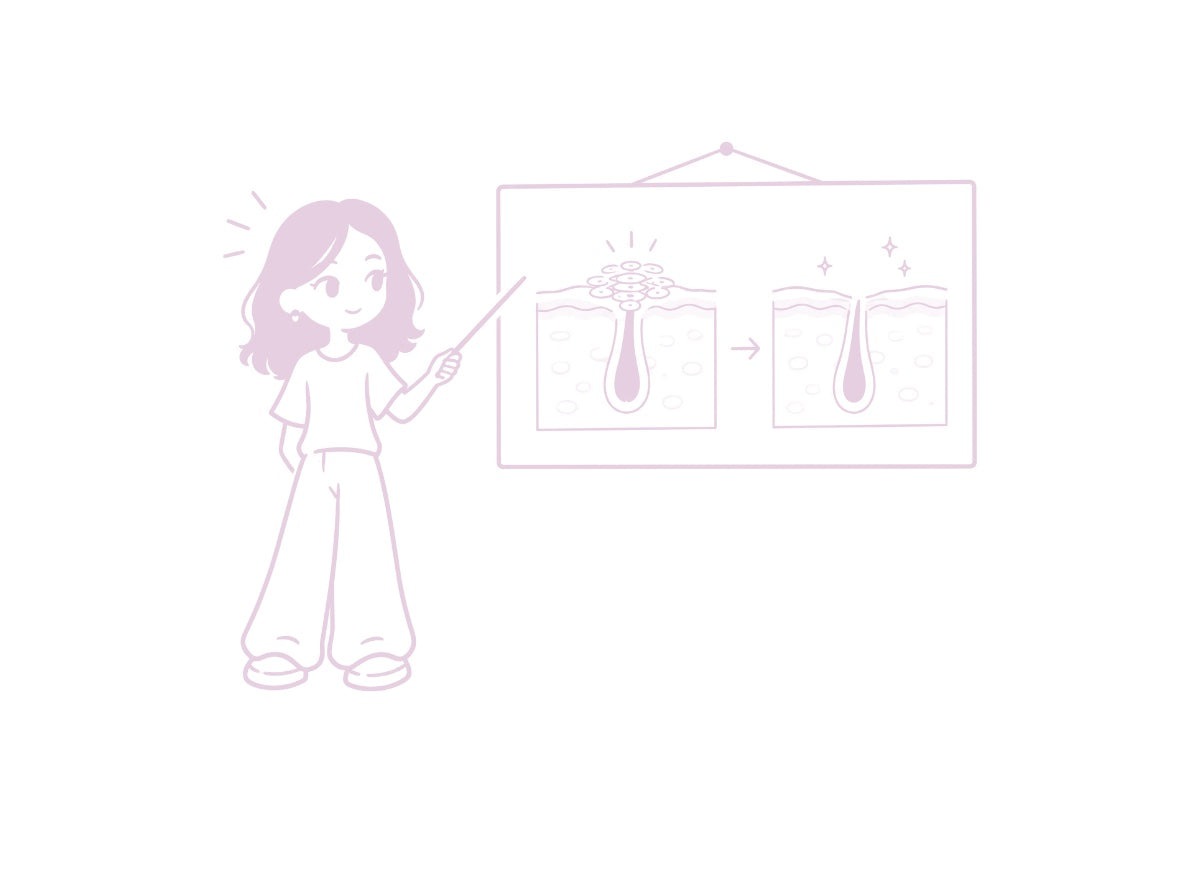
Your skin sheds surface cells continuously. That shedding — desquamation — is enzymatic: specific proteases sever the protein bridges holding dead cells to the ones beneath them, and the cells detach and fall away.
In keratosis pilaris, that process stalls at the hair follicle. Cells that should have released stay bonded, accumulate, and the follicular opening closes over. What you feel isn't something sitting on top of your skin. It's material that never left.
So every step below does one of four things: give those enzymes the conditions to work, loosen the bonds they can't sever alone, keep the follicle calm enough to clear, or stop you resetting the process.
Short, lukewarm showers — never hot
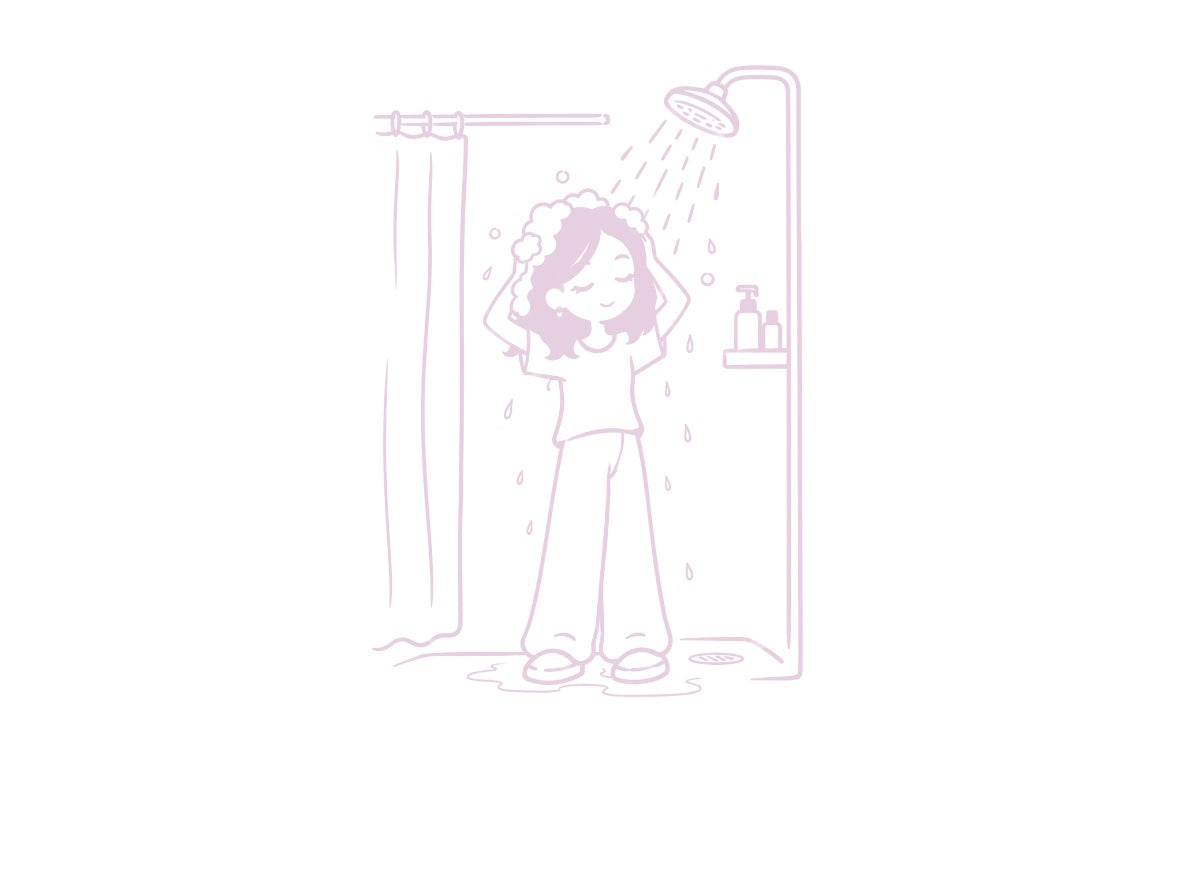
Hot water and surfactants strip the intercellular lipid matrix: the ceramide, cholesterol and fatty acid layer that holds water inside your stratum corneum. Once that barrier is compromised, transepidermal water loss accelerates — water evaporates out of the skin faster than it's replaced.
That matters directly, because the desquamation enzymes are water-dependent. In dry stratum corneum they lose activity, bonds don't get severed, and cells that should have shed stay put. Dryness isn't a side effect of KP. It's an input that keeps it running.
A long hot shower is, mechanically, a dehydration event.
Gentle cleanser, no scrubbing
Harsh surfactants dissolve the same lipid matrix hot water strips, and mechanical friction ruptures the follicular wall.
That second part is the one people underestimate. Current work suggests KP begins when distorted hairs breach the follicle wall from the inside — and the resulting inflammation is part of why the follicle stops clearing. Scrubbing an inflamed follicle adds a second injury on top of the first. The skin's response is to thicken, not to open.
Apply LA OLA LISA — within three minutes, on damp skin
This is a diffusion problem. Damp skin has a hydrated, swollen stratum corneum with looser intercellular packing — actives penetrate further and faster. As the skin dries, that structure tightens and permeability drops sharply.
Three minutes is roughly the window before that happens. The same amount of product applied twenty minutes later delivers a meaningfully smaller dose to where it needs to go.
The occlusive layer also traps the water still on your skin from the shower, turning the shower itself into part of the hydration step rather than something you recover from afterwards.
What's working once it's in:
An alpha hydroxy acid. Water-soluble, works in the upper stratum corneum, disrupting the ionic bonds between corneocytes so retained cells release. It's also a natural moisturising factor: it binds water into the tissue rather than just pulling cells apart. Both actions at once, which is why it tests well.
A beta hydroxy acid, and lipid-soluble, which is the key difference. It dissolves into the sebum inside the follicle and works on the plug from within, where a water-soluble acid can't reach. It also reduces the adhesion between keratinocytes directly.
Not an acid, but keratolytic at 10–20%. It breaks hydrogen bonds in keratin, softening the retained plug, while acting as a humectant that holds water in the tissue. Below 10% it's essentially a moisturiser; the keratolytic effect is concentration-dependent.
Water — 1.5 to 2 litres a day
Topical hydration works from the outside in. Systemic hydration maintains the water gradient from the dermis upward that the stratum corneum draws on.
The enzymes doing the shedding sit at the top of that gradient. Everything downstream in this routine depends on the tissue holding water, and a body running a fluid deficit prioritises organs over skin. This is the cheapest input in the routine and it feeds the mechanism every other step is built around.
Oily fish, nuts, seeds
Omega-3 fatty acids are incorporated into cell membranes and into the barrier lipids of the stratum corneum. That incorporation changes two things: membrane composition affects how well the barrier retains water, and omega-3-derived eicosanoids are less inflammatory than the omega-6-derived ones they displace.
Since KP involves inflammation around the follicle, what your body builds its inflammatory signalling molecules out of is not a neutral variable. You're changing the raw material.
Limit refined sugar and ultra-processed food
High blood glucose drives glycation — sugars bonding non-enzymatically to proteins, including the collagen and elastin in your dermis. Glycated proteins are stiffer and function worse, and the reaction produces advanced glycation end-products that are themselves pro-inflammatory.
Refined carbohydrate also spikes insulin and IGF-1, which stimulate keratinocyte proliferation. In a condition defined by too many retained cells at the follicle, accelerating cell production is pushing in the wrong direction.
Shower and moisturise after exercise
Sweat evaporating off the skin leaves salt behind. Salt is hygroscopic — it draws water out of the stratum corneum for as long as it sits there. Combine that with the friction of training and the damp, occluded environment inside workout clothing and you have hours of low-grade barrier stress.
Rinsing removes the salt; moisturising within the same window replaces what the session cost you. Skipping it doesn't just miss a step, it runs the shower's dehydration effect in reverse for the rest of the day.
Loose cotton
Mechanical friction against an already-compromised follicle causes micro-trauma, and the skin's response to repeated micro-trauma is hyperkeratosis — thickening. That's the same thickening you're trying to reverse.
Tight synthetics add a second problem: they don't wick, so they hold moisture and heat against the skin, macerating the barrier. Cotton breathes, and loose fabric doesn't rub. Two mechanisms, one change of clothes.
Gentle exfoliation — 2 to 3 times a week
Chemical exfoliation loosens retained corneocytes. Done too often, it removes intact barrier lipids faster than your skin can synthesise replacements — and full barrier lipid synthesis takes days, not hours.
The result is a skin barrier permanently behind on repair: more water loss, less enzyme activity, more retention. Over-exfoliating produces the exact condition it's meant to treat.
Two to three times a week is the interval that clears without outrunning repair.
Never shave dry
A blade on dry skin doesn't cut cleanly through the hair — it drags, tears the follicular opening, and leaves a sharper, more angled hair tip behind. That tip is more likely to re-enter the follicle wall.
Given that trapped and distorted hairs are implicated in starting KP in the first place, dry shaving manufactures the precise conditions the condition begins with. Damp skin, sharp blade, moisturiser after.
Humidifier when the air is dry
Transepidermal water loss is driven by the vapour pressure gradient between your skin and the air around it. Dry air steepens that gradient, and water leaves the stratum corneum faster.
This is why KP reliably worsens in winter. It isn't the cold — it's heated indoor air holding almost no moisture. Raising ambient humidity flattens the gradient and slows the loss, which keeps the enzymatic shedding running through the months it usually stops.
Don't scratch
Scratching triggers histamine release, which causes more itching — a self-sustaining loop. It also causes the same micro-trauma as friction, and the same hyperkeratotic thickening in response.
The itch-scratch cycle is a closed loop that only breaks from the outside. Every scratch extends the inflammation the follicle needs to be free of in order to clear.
Apply LA OLA LISA again — evening
The trial protocol behind this routine used twice-daily application for three months. There's a physiological reason it's structured that way: keratolytic activity is concentration- and contact-time dependent, and a single daily application leaves the skin without active for most of the twenty-four hours.
Skin also loses water fastest overnight, and barrier repair and cell turnover both peak during sleep. The evening application puts occlusion and active ingredients in place precisely when the skin is most permeable and most actively rebuilding.
Seven to eight hours of sleep
Barrier recovery is measurably faster during sleep, and growth hormone — which drives tissue repair — is secreted mainly in deep sleep.
Short sleep raises cortisol. Elevated cortisol impairs barrier repair and slows lipid synthesis in the stratum corneum — the same lipids everything above depends on. It also raises systemic inflammatory signalling.
The evening application and the night's sleep are one step, not two: the product works during the window sleep opens.
The system, in one line
Hydrate the tissue so the enzymes work. Loosen what they can't sever alone. Keep the follicle calm enough to clear. Stop resetting the process.